


A scientist walks into a gallery…
Logbook | Dossier | Institutions

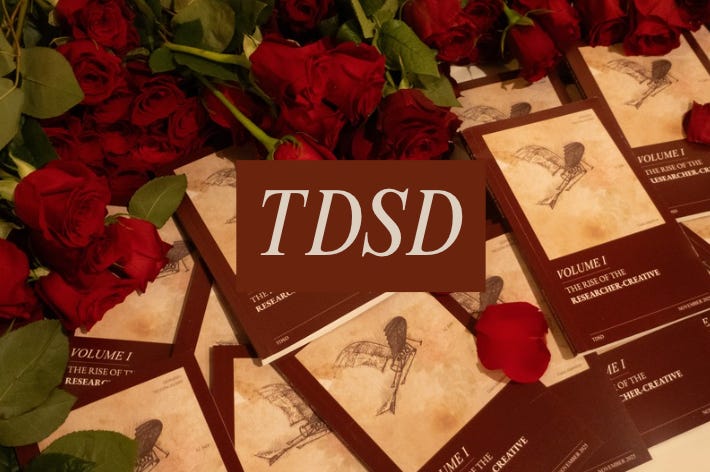
This November, The Distressed Scientists’ Department curated the world’s first researcher-creative exhibition in San Francisco. Volume I: The Rise of the Researcher-Creative featured ten researcher-creatives — scientists using art to communicate their technical work — spanning disciplines from synthetic biology to brain-computer interfaces to textile physics. More than half held PhDs. Almost all had published research or worked in labs.
All wanted more than just a paper to share their work.
This was an active experiment testing new forms for how research could be presented, how it could be seen, how the public could encounter it for the first time.
Go direct. Show the humans, the craft, the process.
Over three days, we invited over 300 guests into the space. It took about a month and a half of full-time planning, plus many, many people supporting behind the scenes.1
The Setup
How do we get people to care about research? The Medici understood that people are drawn to beauty before they’re drawn to ideas. The great world’s fairs knew this. The Bauhaus knew this.
What catches the eye will catch the conversation, the brain, and everything downstream.
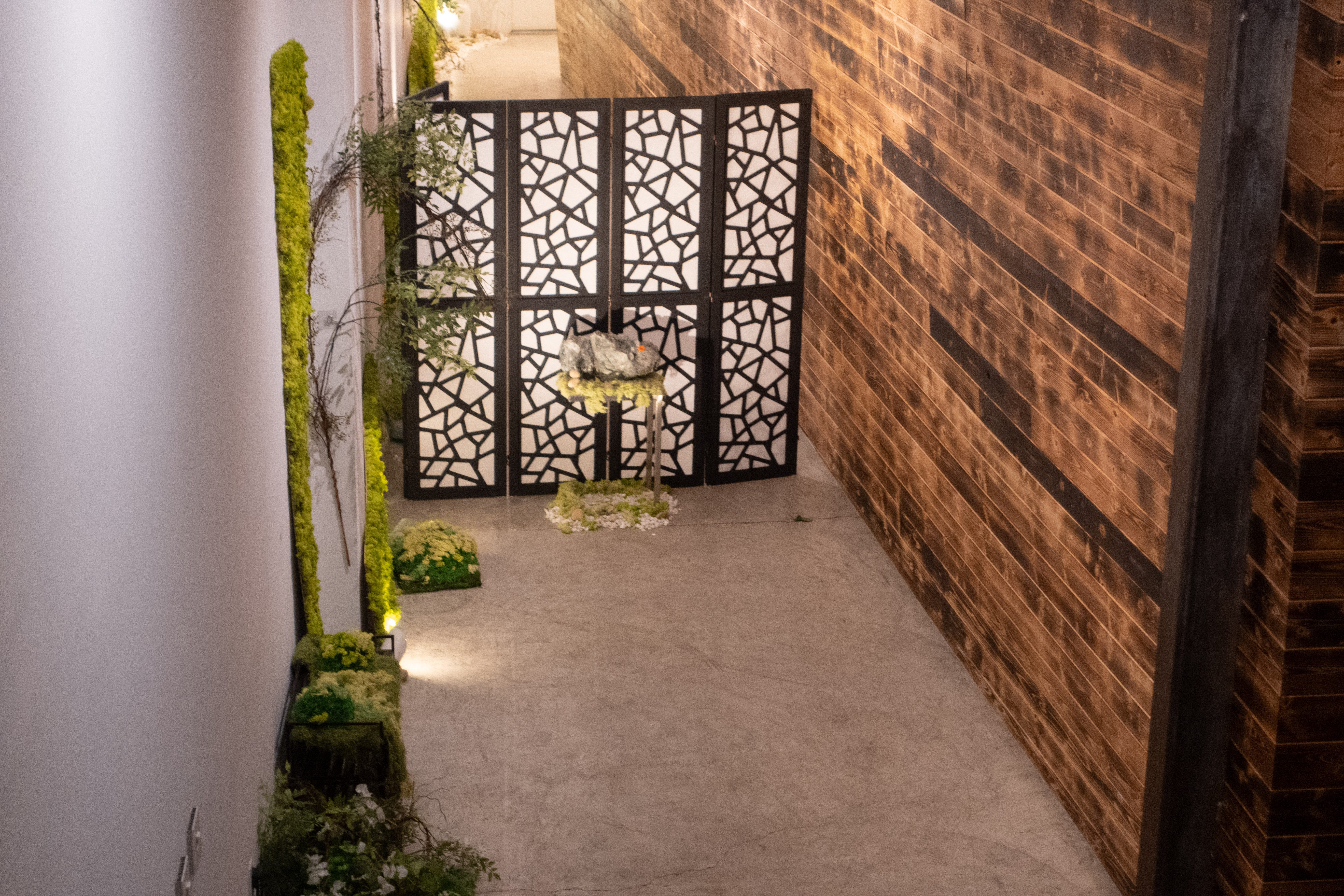
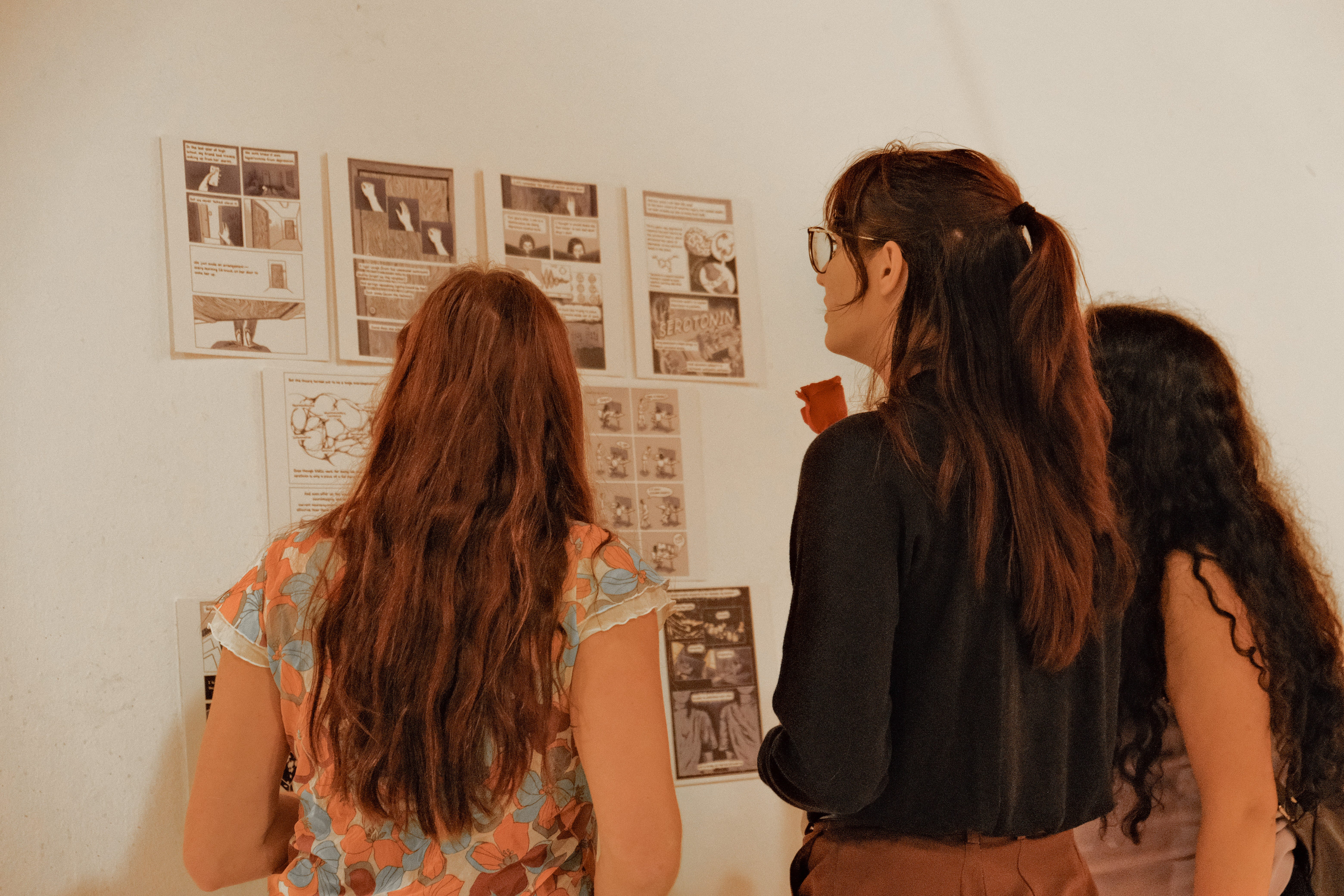
Research is truly beautiful. In my experience, biology makes this most apparent — the structures, the colors, the patterns that emerge at every scale. But the work in this exhibition spanned physics rendered in fabric, haptic devices you could touch, magnified flower cells, brain signals made visible. Each piece existed at the intersection of research and aesthetics. Not research explained through art. Research as art, with all the technical depth intact.
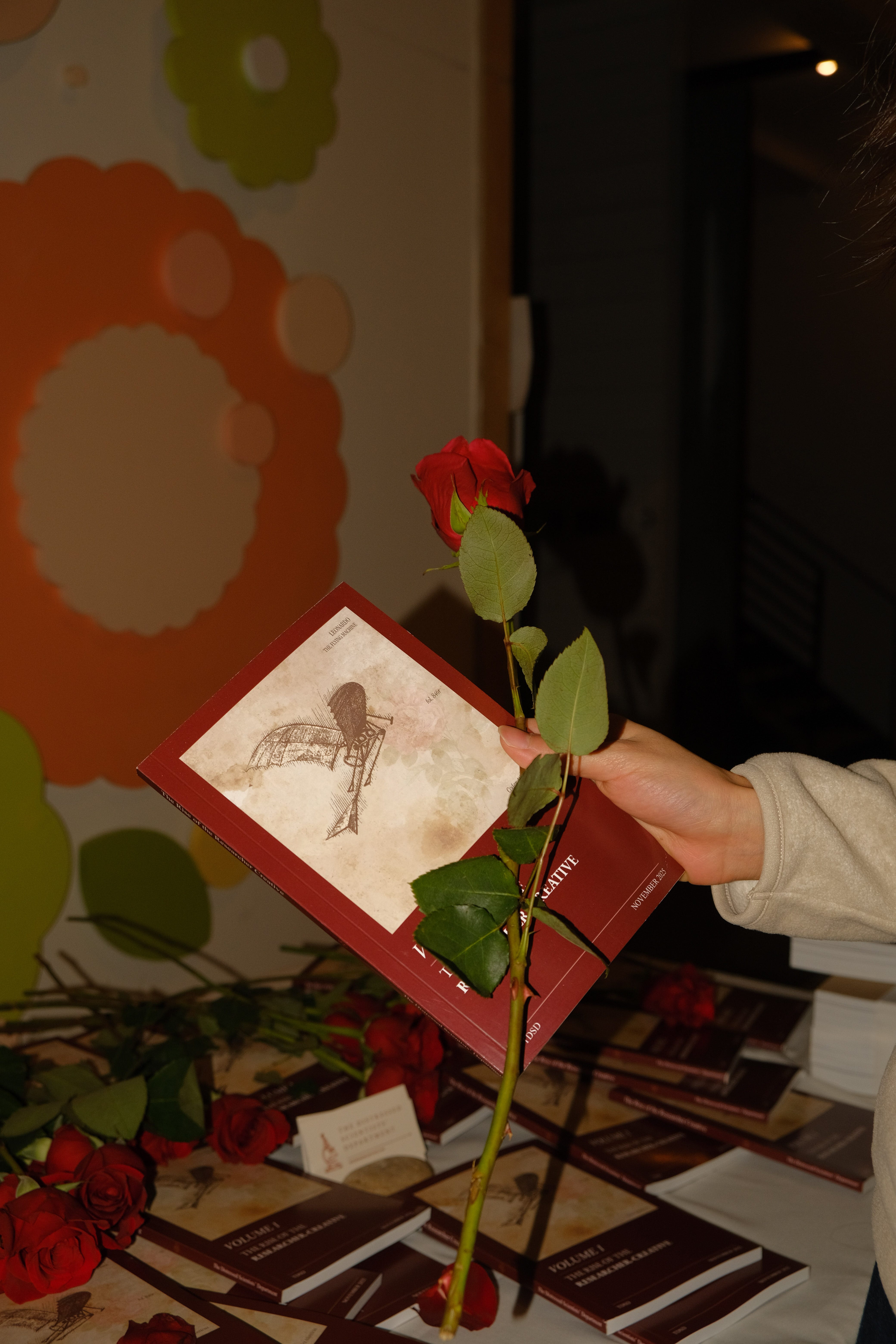
The exhibition was deliberately analog. Print photobooks featured each researcher-creative, encouraging visitors to collect signatures and leave notes. Stamps and souvenirs invited interaction. A rose with thorns offered tactile surprise. Most crucially, the researchers themselves were present — ready to explain their work, discuss their process, or simply talk. When they stepped away, the photobook and materials carried the conversation forward, a deliberate design so the research could speak even in their absence.
Breaking Down the Fourth Wall
This is the trend that will define how art and science engage in the 21st century. The fourth wall between expert and observer is dissolving.
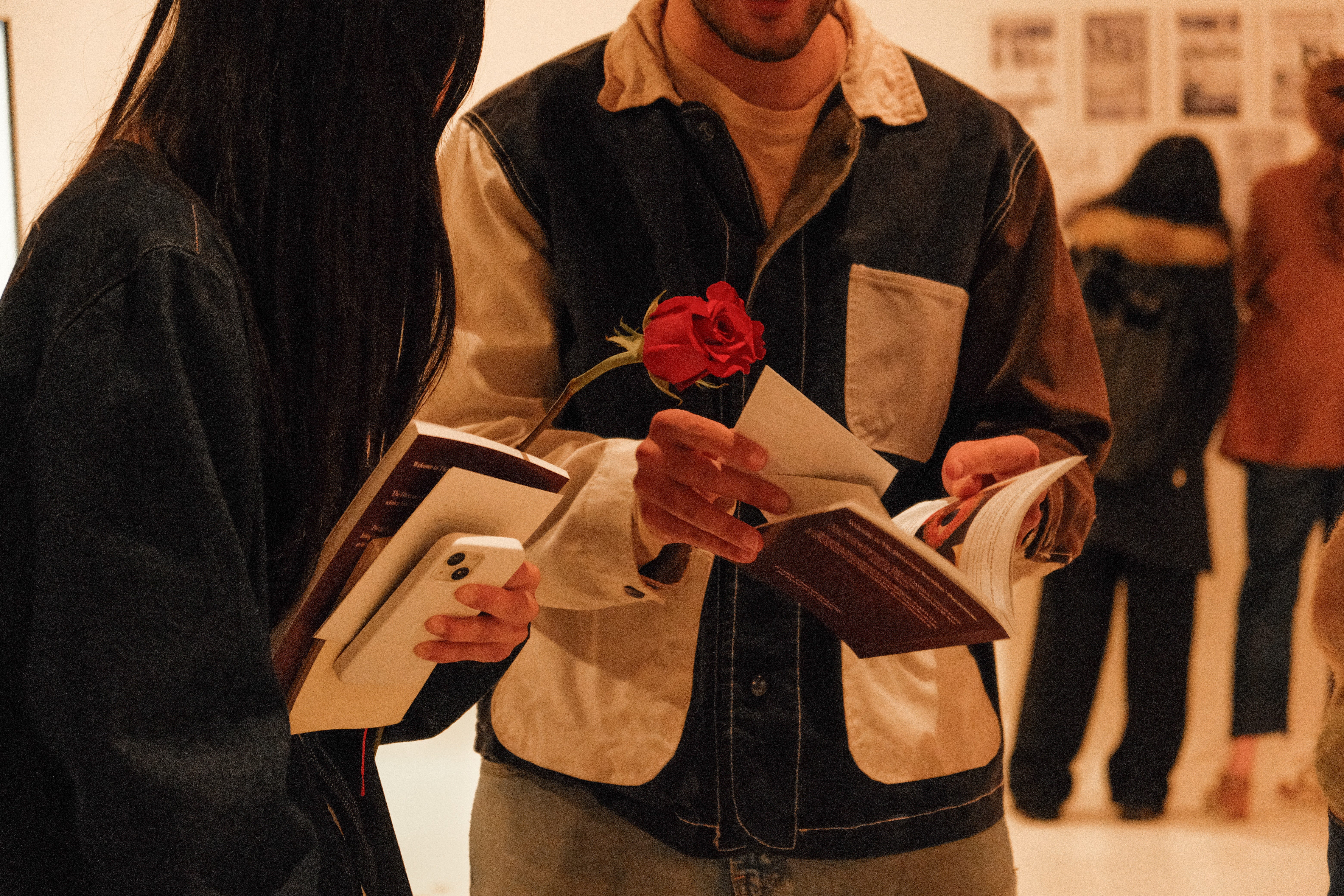
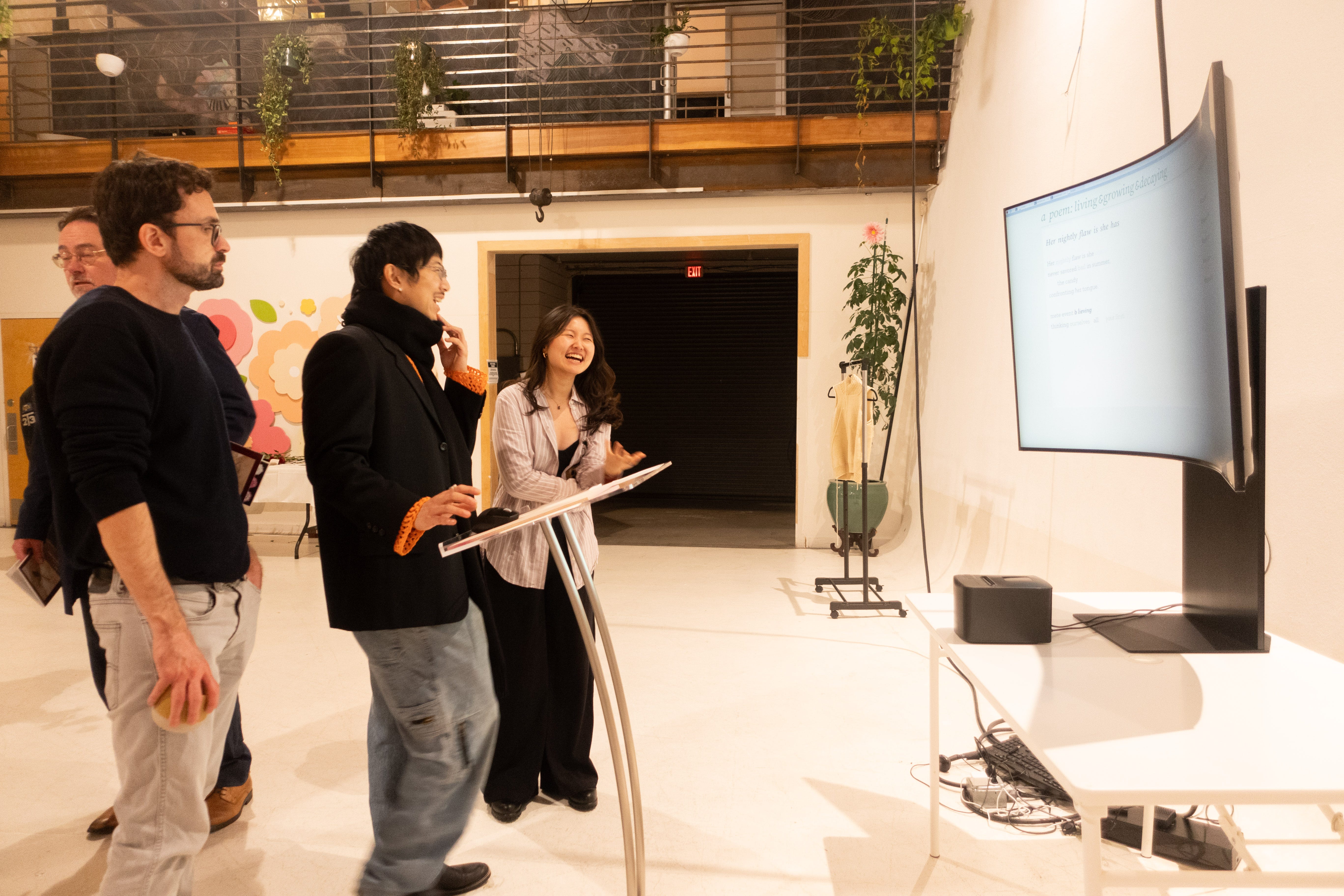
Throughout the exhibit, hundreds of people asked if they could touch the work. They were surprised by texture, by the physicality of research made real. Visitors age 4 to 64 all seemed uncertain about the rules. Could you touch Anna’s haptic slime? Would you damage Alexander’s sweater? The old gallery instincts — reverence for the untouchable object — created hesitation even when permission was explicitly granted.


But something else was present too. Once they were greenlit, people wanted to interact and touch the work, to ask questions directly. There was a hunger for access to knowledge.
The average person is curious, intelligent, and wants to know more. Many attendees were experts in their own fields, excited to branch out and engage with unfamiliar domains. This is proof that there is real viability, a real audience, for presenting research this way. You never know who’s watching, or what connections might form.
This shift is already reshaping modern art — there’s been a rise in interactivity, participation, the breakdown of contemplative distance.
It’s coming to science and research, too, in how we communicate, how we fund, and who engages in these exchanges.
Science isn’t just something you observe in a sanitized cold room or from behind glass — it’s something you can touch, smell, ask about. The exhibition design reflected this: researcher-creatives were present and available, moving fluidly between technical depth and accessible explanation.
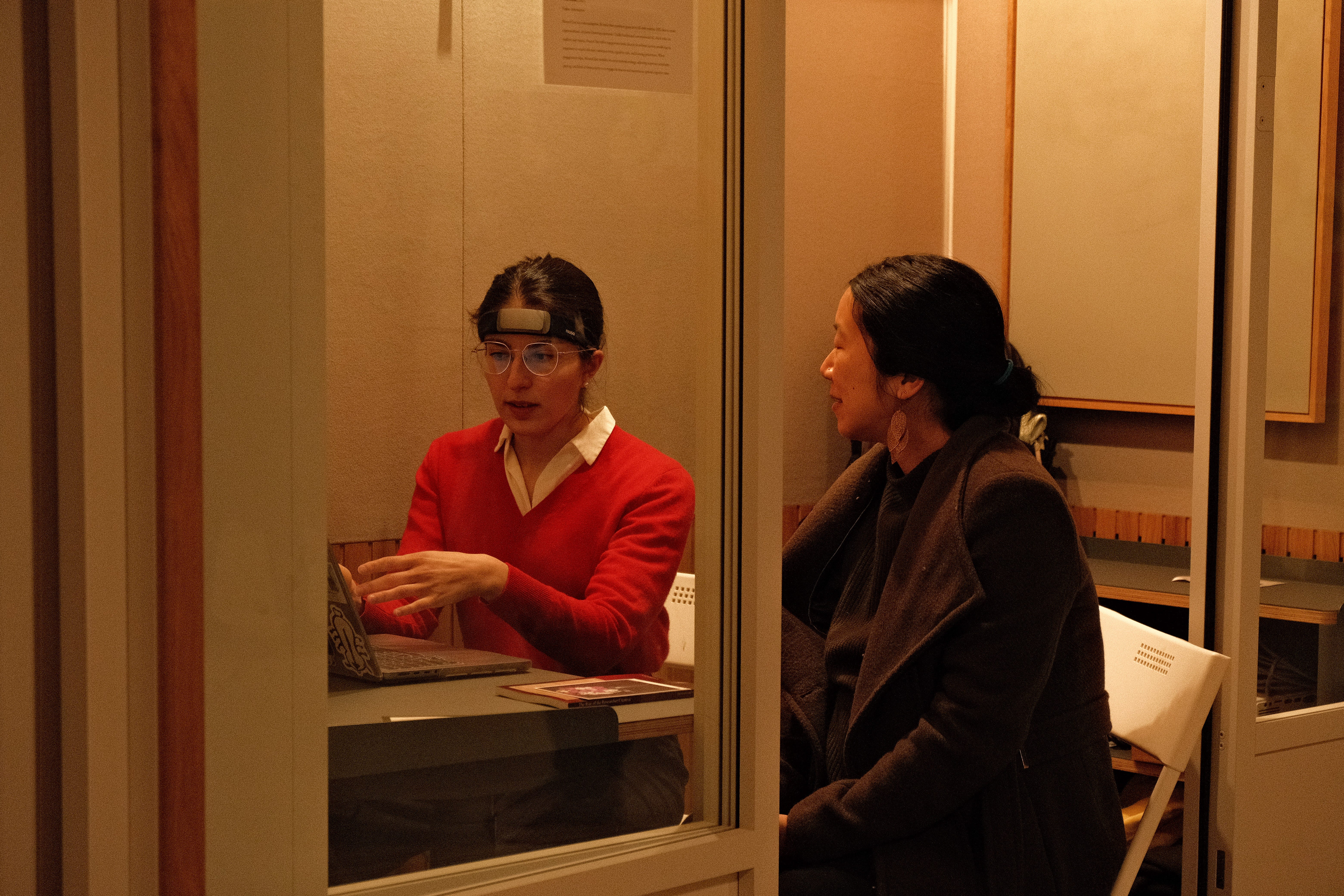
Not less sophisticated than traditional practice. More porous. The work operates on multiple levels at once, meeting people wherever they are.
Here are the main takeaways.
Researchers Go Direct
This will be the foundation for TDSD in 2026. Not researchers working with artists. Not science communication through journalism or PR or publications in the traditional sense. Researchers speaking in their own voice, about their own work, choosing their own forms. In some cases, speaking about their context: their stories, their motivations, the null results, the human dimension that typically gets sanitized out.
There is merit in having researchers be the spokespeople and cultural carriers for their own work, regardless of audience. More on this to come.
Conceptual Art Offers a Useful Lineage
The most valuable framework to borrow from, when viewing research through the lens of visual art, is conceptual art.
Conceptual art proved that the idea could be the artwork, that you could exhibit a process, a system, a set of instructions and unlock value in the pondering and questions that followed.
Research already operates this way. Many works in the exhibition were embodiments of research that, in themselves, did not convey everything. But that was intentional. The value lives in the subsequent conversations that lead to understanding—offering enough to pull you in, revealing layers as you engage more deeply in what would have been previously overlooked.
The Renaissance Archetype Returns
The researcher-creative is modeled after the Renaissance polymath — someone who moves between making and theorizing, who understands work as both discovery and creation, who treats their audience as capable of understanding.
This naturally emerged. Every researcher-creative in the show seemed to embody it — the willingness to answer any question, the lack of condescension, the genuine excitement about sharing their process. No question was too basic. Engagement was the point.
One guest, a teacher turned program manager, stayed for five hours. Just talking. Moving between conversations, asking questions, clearly energized by being in a room where depth was the point.
Not the typical gallery visit of ten minutes looking, five minutes at the wine table. Five hours of genuine engagement.
This archetype is coming back.
People Love the Weird Nerd
There is an audience that loves technical conversations. Our longest-staying guest spoke with everyone for five hours, but there were many others stayed for two, three hours — far beyond typical gallery timing.
Scientists should give the public more credit for their intellectual curiosity, and the public should give scientists more credit for their patience and creativity. We’re all human. Many people geeked out over details, diving deep into methodology, asking follow-up questions, genuinely excited to understand the work at a technical level.
Many scientists are kept hidden from public view — by PR teams, by institutions — out of fear they’ll be too nerdy, too introverted, too stereotypical. But people don’t mind this. Some revere it.
Truly Non-Traditional Funders are Emerging
There’s been an uptick in private funding versus traditional NIH/NSF funding, particularly in the life sciences. That trend will accelerate — but not just from your "traditional non-traditional" philanthropic and VC funders.
This exhibition attracted an unexpected audience: representatives from legacy and luxury brands. They gravitated toward work aligned with their domains — textiles drew fashion houses, biology and chemistry drew cosmetics companies.
These legacy companies seek authentic cultural connections through corporate social responsibility, especially as they attempt to stay relevant to socially conscious, Gen-Z consumers. Investing in public goods, like research, might become one such signal.
Money and attention from corporate and art domains are already flowing into creative technology: Hyundai’s ArtLab, Google Arts & Culture, programs at Autodesk, Adobe, Planet Labs, Microsoft.
In this landscape, how researchers present their work and draw attention becomes increasingly important.
Cross-Pollination
Several of the researcher-creatives met each other in person for the first time at the exhibition. Ideas and contacts began flowing not just between researcher-creatives and guests, but among the researcher-creatives themselves.
Researchers don’t often talk to those outside their field, or even understand what adjacent disciplines are doing. How can you integrate ideas without proximity?
This served as a quiet extension of the salon model, where proximity generates unexpected connections.
There are Billions of Stars
Many people are researchers and creatives, whether they use those terms or not. Technology has enabled more people to learn more skills, to study more topics deeply— which means we have more researcher-creatives than we realize, and that number will grow.
Twenty-five people from the same frontier AI company told me about their digital gardens, their design practices, their musical hobbies. They often didn’t see themselves as “researcher-creatives” — they looked at the installations and thought their own work didn’t count.
I disagree.
There are many reasons people will start to take up more sub-niches — whether that’s niche research or niche creative practices. Competitive funding landscapes and new avenues of opportunity will incentivize people to be seen and recognized as researcher-creatives. Independent researcher-creatives will become alternative sources of both funding and visibility. Visibility will be king.
What Comes Next
In 2026, TDSD will be developing the “researchers go direct” framework more extensively — what it means for scientists to own their cultural narrative, choose their own forms, and build direct relationships with audiences.
There will be more curation and exhibitions with partners, but also open-source frameworks so scientists can apply this approach to their own work.
The landscape is shifting. AI, speed, digital art, scientific illustration, design engineering — all changing how research gets made and shared. Funding avenues are evolving.
If you want to follow along, new exhibits and commentary are always shared here.
We’d love to have you.
—Jolie
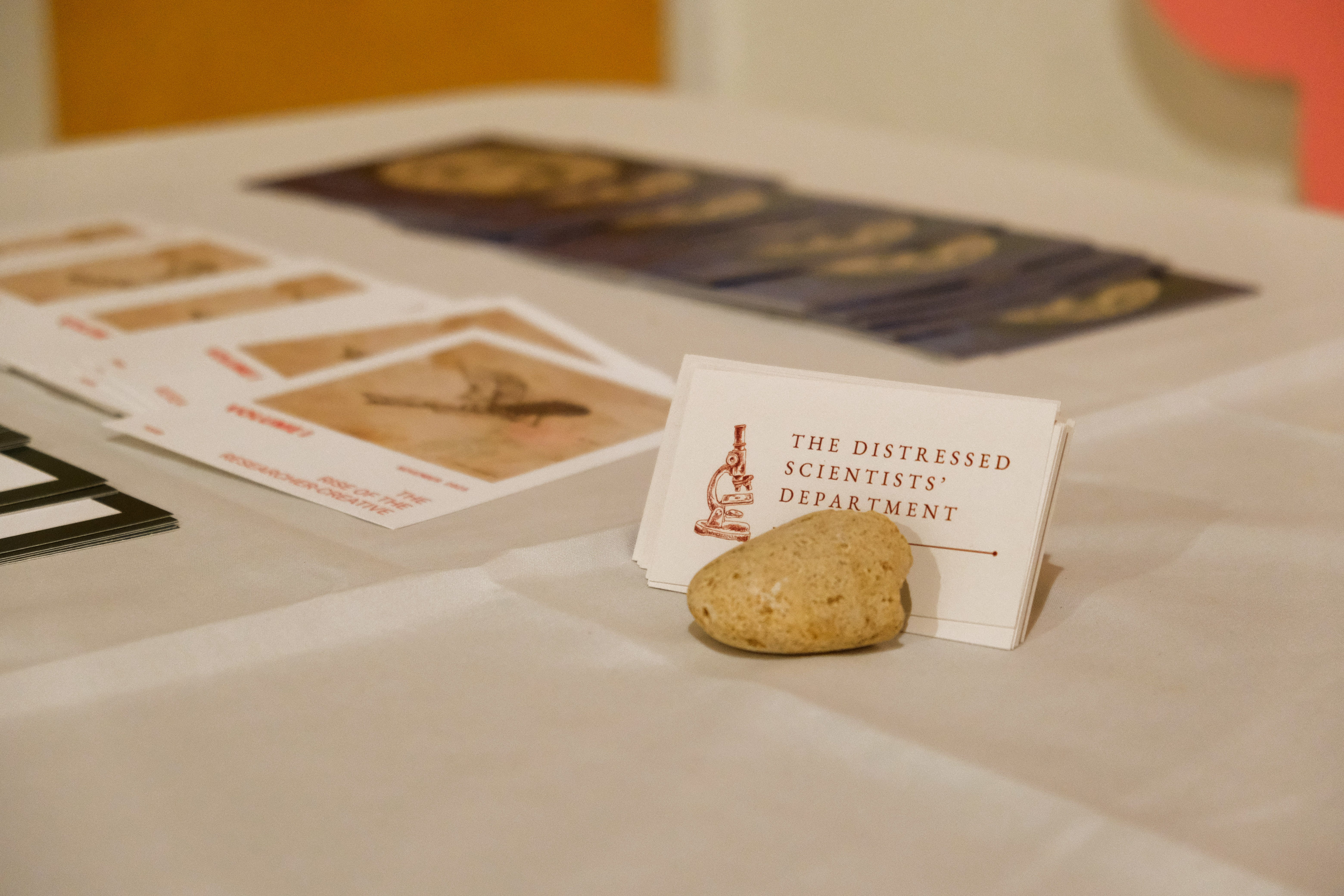
A scientist walks into a gallery… not merely as an observer, but as the artist.
There are too many people to count who made Volume I possible. Here are some of them:
To the first ten researcher-creatives — Nick, Ninon, Dunya, Alexander, Alicia, Anna, Spencer, Joyce, Shahvir, and the PRISM collective — for their trust, patience, creativity, and inspiration. This wouldn’t exist without you.
To everyone who kindly sponsored and made this possible: Niko McCarty and the team at Asimov Press, Clara Collier and the team at Asterisk Magazine, Jun Axup Penman, Wojciech and Agata Zaremba, Tammie Siew and the team at Pebblebed VC, and other anonymous contributors.
To everyone who supported logistics along the way: Wilbur, Ivy, and Bonnie; the incredible photography team; Julianna Lamm for her exceptional work on the website; and the one and only James Lin for cover design, directorial contributions, and postcards.
To the supporters and cheerleaders whose early belief made all the difference: Ashlee Vance, Noah Smith, Erin Smith, Ashwin Ramaswami, Ben Reinhardt, Lauren Gilbert, Charles Yang, Hardeep Gambhir, Sofia Sanchez, Christina Agapakis, Chloe Yan, Grigori Guitchounts, Armaan Ajoomal, Armaan Dhanda, queenie wu, Sam Enright, Antonia Theodorakopoulou, Emma Cappiello, and countless others.
And to you, for reading, for supporting. Thank you. This is just the beginning.
Thank you for everything
These photos are breathtaking. Wow.