This day one year ago I was in a tiny campus lab, sobbing after hours.
I was torn about whether to start my PhD. I loved the work, but the life that came with it felt like 70 prescribed years. Publish or perish. Grants and guardrails. It didn’t make sense to me — the scientists around me were some of the most creative people I’d ever met, but everyone felt stuck.
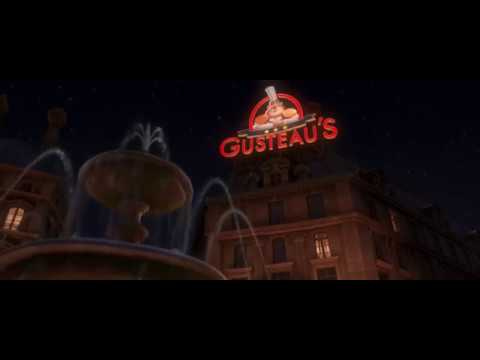
Ratatouille tells us not everyone will be a great cook, but a great cook can come from anywhere. I think about that a lot in science. Talent is evenly distributed, opportunity is not, and the standard pathways often miss where genius actually lives.
I didn’t live through the excitement of the dotcom bubble. I’m not old enough to remember Bell Labs or BP Venture Research at their peak. I only later learned that Hans Ulrich Obrist held his first art exhibition in his kitchen at age 23 to question who gets to be an artist.
Yet the scientists we look up to — even dating back to Galileo, Michelangelo, Einstein, Feynman — weren’t narrow. They moved between disciplines, observed science through principles of craft, and let curiosity leak into materials and public life.
Somewhere along the way, we lost that texture. If Feynman were a 30-year-old scientist today, he’d be bogged down by publications and chasing grants. He’d be told, “yo Rich, here’s $100,000, you have 5 years to figure out thermodynamics, or don’t step foot here again.”
Over the last few months, I went looking for people who refused to be boxed in. I found researcher-creatives who are redesigning what research can look and feel like — something you can hold, wear, share, argue with, and carry home. Many of them are early in their careers, building outside paid hours and on their own dime, because they believe strongly in their science being seen. They inspired me to extend The Distressed Scientists’ Department into a haus for the artifacts of science.


On Mon, Nov 17th, we open Volume 1: The Rise of the Researcher-Creative in San Francisco. It’s an exhibition celebrating science, with pieces you can interact with, on-stage conversations, and a printed passport-style booklet you can stamp and get signed.
You’ll meet researcher-creatives who treat software like civic space and build shrines that only awaken when you offer your phone. You’ll touch shape and haptic interfaces designed to translate chemistry or anatomy for blind and low-vision learners. You’ll read computational poems that invite fertile nonsense and watch robotics that ask humane questions. You’ll hold bio-crafted blooms and hear why the lab is not the only space for living ideas.
Why do this as a show and not another paper? Because publics matter. Because form teaches feeling, and feeling changes what we fund, teach, and try next. Because science is not only a pipeline of results; it is a culture of practice. If we want a culture that produces wild, useful, generous ideas, we should make room for the practices that generate them — sketching, sculpting, sewing, staging, printing, performing. They are methods.
I am not old enough to have seen Eames Gallery and IBM’s Powers of Ten premiere, but I can help make this era’s version of a public invitation to wonder. I can host a kitchen-sized show that grows into a house for messy, excellent, tactile research. I can look at the next “cook from anywhere” and say: we saved you a table.
RSVP HERE

When
Opening Gala: Mon, Nov 17, 7:00–10:00 PM
Public walkthroughs: Nov. 18th-19th, 12:00-7:00 PM
Where
Pebblebed VC
Dress code
Come as you tinker.
A note on patrons. We are closing the final 10k to cover travel and shipping for our artists. Many are PhD students and postdocs who have carried these projects for years outside regular paid hours. All patrons will be invited to a patrons-and-artists dinner before the show. If you would like to help, reply to this email and I’ll follow up with details.
Thank you to Pebblebed VC for generously hosting us, and to the friends of TDSD across research and art who nudged this idea. If you believe, as I do, that science belongs on the public stage, come stand with us on Nov 17.
Bring a friend. Bring your curiosity. Bring a pen for signatures.
— Jolie