


Logbook | Dossier | Institutions

I. Immediate Response and Backlash
III. The Winners of the Unknown Prize
VI. How the News Spread Beyond Sweden
VIII. Through Wars and Downturns
Ragnar Sohlman exhales, shakily, with a briefcase in one hand and a pistol in the other.
It is January 1897, and the cab he is riding in has just left a bank on the Boulevard Haussmann containing the fortune of the richest man he has ever known. The carriage behind him is packed full of parcels sized to the insurer’s per-parcel limit.
Bank, cab, consulate, then the Gare du Nord, he thinks to himself. When he arrives at his destination, his parcels will be checked as registered luggage to Stockholm; others will go to London to be sold. He has been told that thieves in Paris stage carriage collisions and that a young man – at the ripe old age of twenty-six – carrying securities should expect one.
Luckily, he does not need it that day. The only attacks he had encountered were earlier, from his former employer’s nephew, who had come with a brother-in-law and a lawyer to contest the will of Sohlman’s former employer. The man was barely dead. What a disgrace.
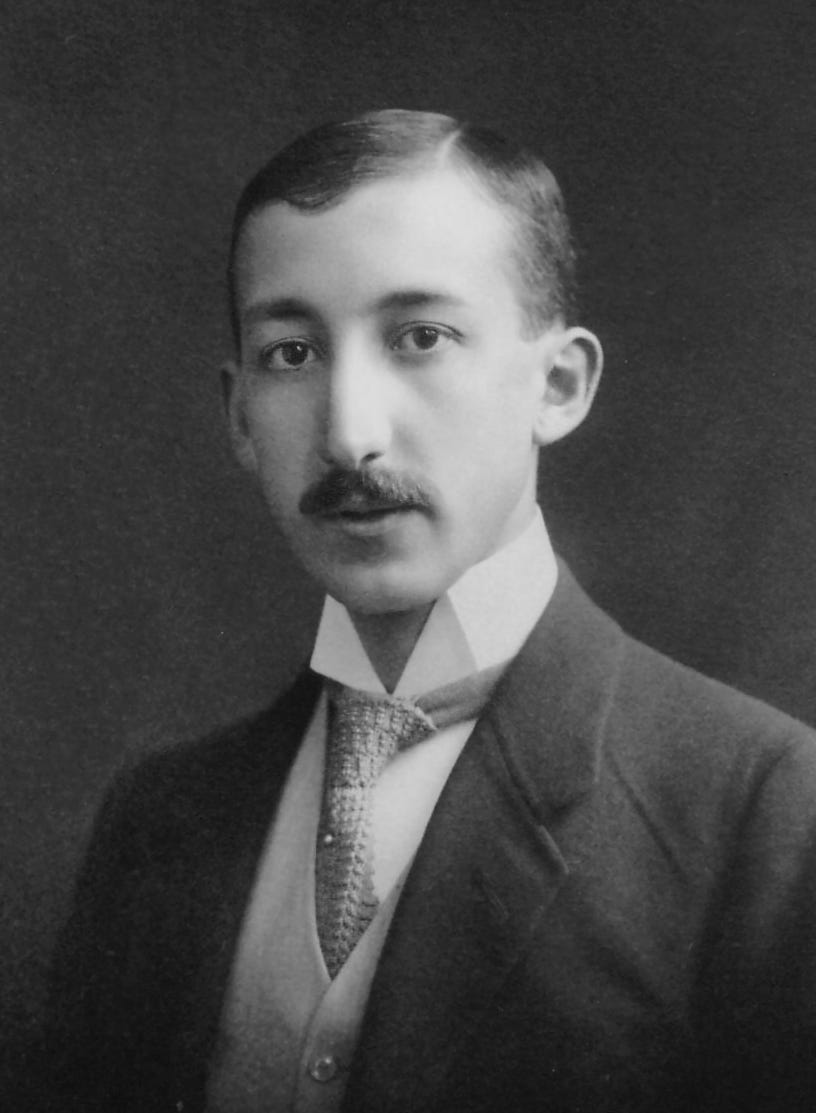
The will is four pages long. Alfred Nobel himself had written it, at the Swedish-Norwegian Club in Paris, in November 1895. He had no lawyer – he had already lost a lawsuit once and had decided he could do without them. The witnesses were four men who happened to be at the club. The document leaves the residue of his estate, more than 90% of it, to a fund that does not yet exist, to be administered by just four institutions: the Royal Swedish Academy of Sciences, the Karolinska Institute, the Swedish Academy, and a not-yet-named committee of five to be chosen by the Norwegian Parliament. There is no legatee. In legal terms, there is nobody to inherit the sum.


In May 1897, The New York Times predicted that the Swedish and Norwegian authorities entrusted with awarding the so-called Nobel Prize faced a responsibility that would bring “more trouble than glory.”
For young Ragnar, the man entrusted by Alfred Nobel himself to execute his will, this certainly seemed to be the case.
Four years later, on December 10, 1901, the first Nobel Prizes were presented in Stockholm and Christiania.
Today the Nobel hardly needs an introduction. Universities count their laureates, governments celebrate them, and scientists who agree on nothing else agree that winning one places a peer among the most distinguished people in the field. In 1897, none of this was inevitable. Someone had to agree to administer the prizes, scientists had to agree to accept one, and the general public had to be convinced that a science award decided by Swedish academics was worthwhile.
Why is the Nobel the only science prize most people have ever heard of?
Science had already been managing quite well without Alfred Nobel.
The Royal Society had awarded the Copley Medal since 1731, to the likes of Franklin, Faraday, and Darwin, and the Académie des sciences in Paris ran multiple prizes of its own.
Nobel’s unfair advantage was the scale of his enormous fortune, but also the array of fields he hoped to award.
Nobel himself was not a university scientist. He was a chemist and an engineer who had spent his entire life developing explosives. At the time he died, he held 355 patents, ran factories in approximately 20 countries, and owned a stake in his brother’s oil company in Baku. He had never held an academic position.
Yet throughout his lifetime, Nobel had become increasingly interested in putting his fortune towards the advancement of knowledge. He had considered funding scientific prizes in an earlier will from 1893. Two years later, he decided to enlarge the idea, including literature and peace. It was more ambitious than any scientific prize the world had ever seen.
Nobel had actually specified the institutions he wanted to award each of these awards. Physics and Chemistry would go to the Royal Swedish Academy of Sciences. Medicine would be handled by the Karolinska Institute. Literature would fall to the Swedish Academy, and Peace to a committee appointed by the Norwegian Parliament. He was also unusually explicit about nationality: he hoped that prizes would go to the most deserving candidates internationally, whether they were Scandinavian or not.
I. Immediate Response and Backlash
In 1897, the leading scientific nation of the world was Germany. Behind Germany were England and France. America was still in the process of building its own research universities and no American would win a science prize until 1907. Sweden, as a relatively small country in Europe, was proposing to judge the scientists of these larger, dominant scientific powers.
Domestically, the existing Swedish scientific establishment had little reason to acknowledge the award. Sweden already had a network of universities and academies, and its own established methods of recognizing scientific achievement. Administering a private international prize would require time, expertise, personnel, and an institutional responsibility for decades, potentially centuries, to come. Awarding the wrong scientist could provoke criticism from the scientific community abroad. Even though the money belonged to the Nobel Foundation, the humiliation, should anything go wrong, would belong to the scientific academies.
The king also rejected the notion of the award. Oscar II, who ruled both Sweden and Norway, told Emanuel Nobel, head of the family’s Russian branch, that he should not “neglect his duty to his relatives in favor of the nonsensical ideas of your uncle,” whom he believed had been “got at by peace fanatics, particularly by women.”
The Swedish branch of the family did not want it either – so much so, in fact, that they sued. In a Stockholm gossip column in January, a correspondent reported that the relatives had discussed asking for an autopsy on the grounds that “the testator suffered from megalomania.” The body had already been cremated.
Sohlman had arrived in San Remo too late to see Nobel alive. His mentor had died on the night of December 10, 1896, alone with his servants. When he arrived back in Sweden, he and fellow executor Rudolf Lilljequist enlisted the lawyer Carl Lindhagen. Together, these three men would spend the next several years trying to turn Nobel’s will into something legally workable.
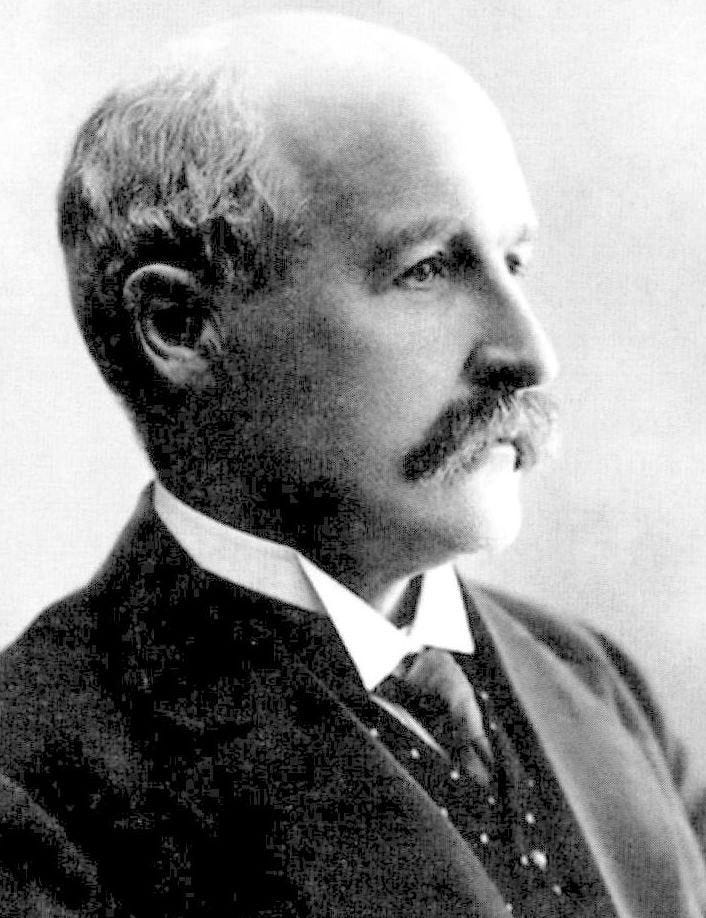

Their first order of business was to establish Nobel’s legal domicile in Sweden rather than France, where the will could have faced legal challenges. They also had to reach an agreement with Nobel’s relatives.
Some relatives wanted the riches to themselves. Others worried that the academies would use the fortune for their own benefit. Others still feared that Nobel’s ambitions were too vague and too impossibly aspirational to fulfill.
The institutions had also rejected their appointed responsibilities out of fear of carrying liabilities that came with failing to select the most deserving candidates, and being tasked with evaluating nominations. It was a heavy undertaking. What if a discovery celebrated in 1901 was disproved in 1905? What if a scientist who had been passed over for the prize ended up transforming their field in 20 years? It would demonstrate that the judgment of the committee was wrong.
Eventually, the three men struck arrangements that proved persuasive and decisive for the institutions. The first was an international nomination system. The Swedish committees would not have to identify the world’s most consequential researchers unaided. They could solicit recommendations from qualified scientists abroad, which gave them the opportunity to de-risk candidates through sheer strength in numbers.
The second was the creation of Nobel Institutes. These institutions would be financed from Nobel’s fortune but belong to the prize-awarding bodies. They could support investigations connected to the awards and, in the case of the scientific institutes, conduct research of their own.
The larger, longer-term vision behind them was to transform Stockholm into an international center of scientific activity, and the Nobel Prizes could help draw attention to the research taking place there. This would, in turn, encourage future talent and investment to flow inward.
The academies were convinced, having been offered something considerably more attractive than an additional administrative burden. Their time and personnel investment would now support the acquisition of research resources, international relationships, and a more prominent position within the scientific world.
II. The First Nominations
And so the Royal Swedish Academy of Sciences began writing to professors abroad, pooling names for the inaugural – and at the time, unknown – Prize.
Simultaneously, it appointed two committees of five scientists, one for Physics and another for Chemistry. All ten were Swedish and chosen by the Royal Swedish Academy of Sciences, which retained the final vote. The international nominations were meant to support the Swedish judges, providing access to discoveries and expert opinions abroad.
The system was hardly free of personal conflicts of interest. Svante Arrhenius helped organize the early prizes, served on the physics committee, and won the chemistry Nobel himself in 1903.
The committees would solicit recommendations from members of scientific academies, university professors, previous laureates (in a few years, once there were some), and specially selected researchers outside Scandinavia. Foreign universities were included on a rotating basis. Importantly, candidates could not submit applications themselves.
In Chemistry, Nobel’s home domain, the Committee sent approximately 300 invitations annually. The first year produced twenty nominations. Of those twenty, eleven named the Dutch chemist Jacobus van ’t Hoff, whose work on chemical kinetics, equilibrium, and osmotic pressure had helped establish physical chemistry.
He was already well known. The Academy could demonstrate that respected researchers outside Sweden considered him deserving of the award. He was an easy choice.
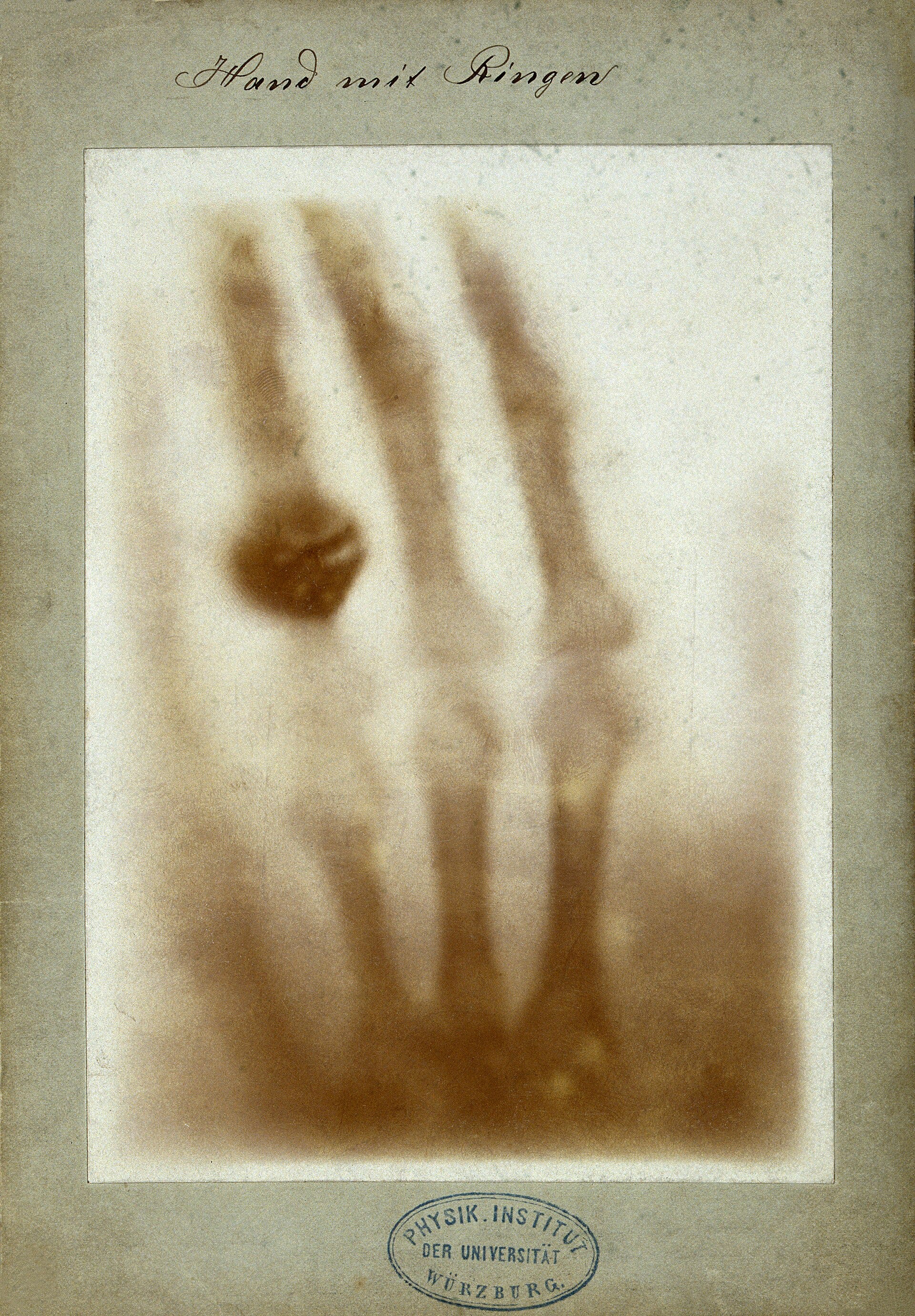
The nominations in Physics included Max Planck recommending Wilhelm Röntgen, the discoverer of X-rays. X-rays had already made their rounds in the popular press, with features in comics and books and articles covering the discovery with enthusiasm. Röntgen himself nominated the British physicist Lord Kelvin. Other candidates included Henri Becquerel, Gabriel Lippmann, and the young Italian inventor Guglielmo Marconi.

From its beginning, the Nobel involved scientists who had little connection to Sweden. A professor who received an invitation abroad could participate in judging the award, even if nobody from his university had ever won it. This allowed the Academy to access scientific expertise abroad, and its correspondents acquired a reason to pay attention to the new prize – the hope that they, or their institutions, would soon take home one of these revered prizes.
III. The Winners of the Unknown Prize
Folke Henschen is twenty years old, one of the student marshals assigned to guide guests through the first Nobel Prize ceremony. He has been instructed to stand very, very still.
It is just before seven o’clock on the evening of December 10, 1901. The young student stands, shoulders back, in the great hall of the Royal Academy of Music – a room he will, seventy years later, describe as “unpretentious, rather boring.”
Tonight, the inaugural Nobel Prize winners will be named and recognized. The identity of the laureates is a mystery, unlike the modern practice of announcing winners months beforehand. Though perhaps the surprise was rather spoiled when a few sharp spectators noticed three distinguished German-speaking gentlemen who had arrived by train and checked into the Grand Hotel.
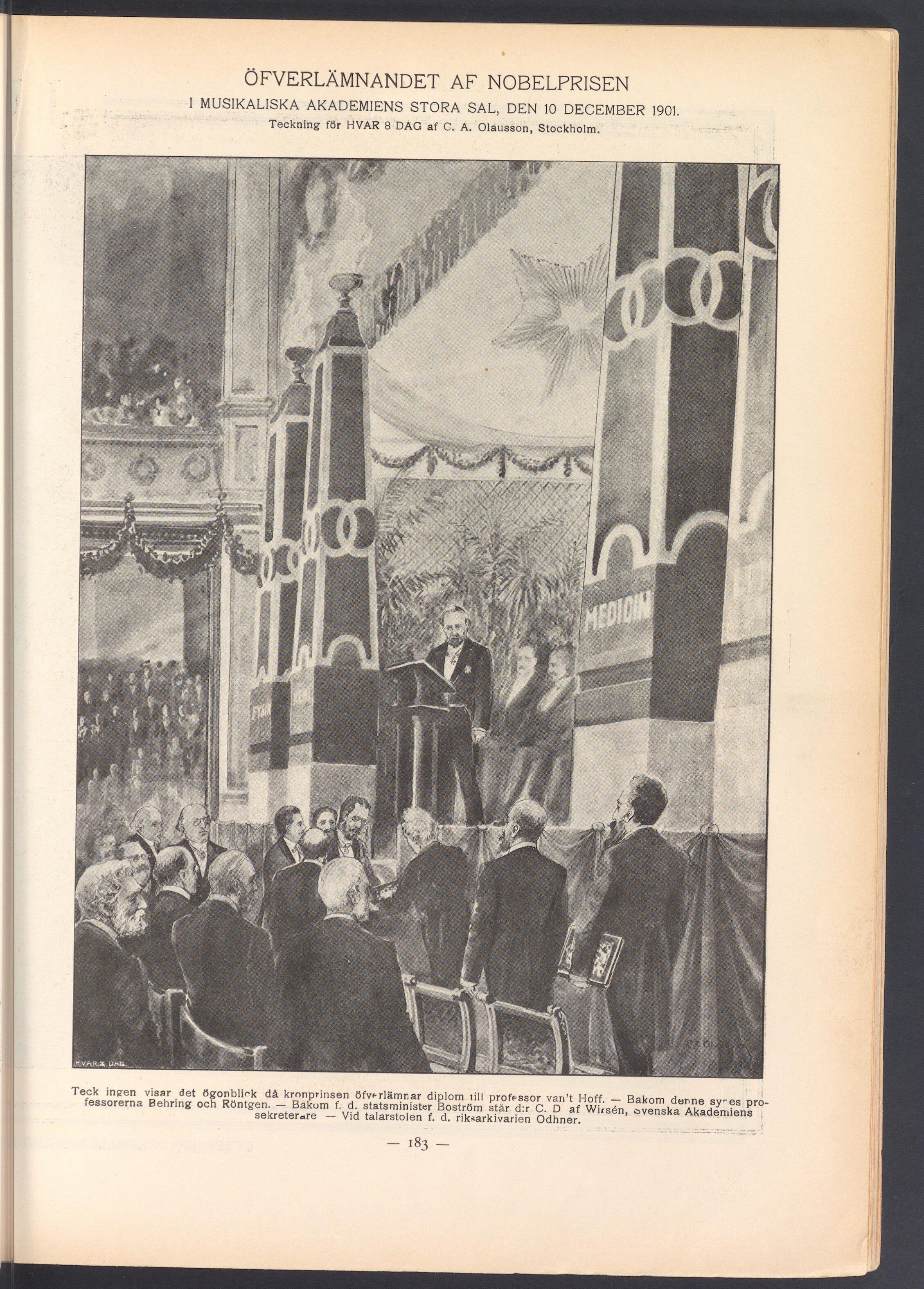
The room is positioned rather awkwardly. The architect Agi Lindegren had done his best: the orchestra’s platform was covered in pine branches, and around it rested four smaller discs lettered PHYSICS, CHEMISTRY, MEDICINE, LITERATURE. At the center, a white bust of Alfred Nobel sat beneath an enormous laurel wreath.
The king of Sweden is not coming. He is in Christiania, where the union with Norway is crumbling apart, and instead the Crown Prince will take his chair.
At seven sharp the laureates walk in, followed by the royal party. It is rather quiet; there is no fanfare as they enter. A tall German with a large dark beard, a blond clean-shaven Dutchman, an elegant German in a frock coat. The fourth chair on the stage is empty; the French poet Sully Prudhomme is ill, and his ambassador will collect the diploma. About a hundred and fifteen guests are in attendance. Their presence is not enough to fill the room, and so their accompanying servants have been invited to sit in the galleries.

That evening, they feasted. That evening, they ate brill prepared Normandy style, beef fillet, roasted grouse, and a dessert prepared by the hotel’s pastry kitchen. The wines included a German Riesling from 1897 and an 1881 French red. The entire menu was written in French, as was customary for an occasion of that kind.
There were speeches, toasts, and much celebrating. Behring used his banquet speech to announce he would spend his prize money continuing his research on tuberculosis.
Each full prize amounted to 150,782 kronor, more than $40,000 USD in 1901 (approximately $1.5M USD in 2026). The sheer size of the award provided substantial independence and freedom for future research. And for people like Behring, who already had a laboratory to finance and experiments he wanted to conduct, the money was immediately useful, even if nobody remembered the prize in twenty years’ time.
That evening, according to Henschen’s recollection, two of the student marshals lifted van ’t Hoff into a golden chair and carried the Dutch chemist around the room, chanting. The world’s first Nobel laureate in chemistry had become the entertainment of the night.
IV. Did the Winners Care?
Not immediately. Röntgen was already the most famous scientist in Europe; six years earlier a Vienna paper had announced his X-rays under the headline “A Sensational Discovery,” and in that one month the story had been reprinted in a hundred and twenty-one Austrian newspapers. He gave no Nobel lecture in Stockholm, though the statutes required one within six months, and went home; the Academy decided the following year not to press him and to warn future laureates instead.
In Christiania, Henri Dunant, the founder of the Red Cross, seventy-three and bankrupt in a Swiss nursing home, left his half of the Peace Prize in a Norwegian bank, untouched, for the nine years until he died.
V. And the Public?
Not quite. The morning afterwards, the Nordic dailies gave it about 300 words in the Scandinavian column.
It took a mere three days for the newly minted Nobel to cause its first major stir; that is, the only strong feeling that it produced among the people was anger.
The Academy had passed over Tolstoy for Sully Prudhomme in selecting a winner of the Literature Prize, and people were furious. By that same Friday, 42 writers, painters, and composers had signed an address to Tolstoy saying that the body which decided the prize reflected neither the view of artists nor the public.
Tolstoy, in a letter that was in print in New York by April the next year, announced, “I am very glad that the Nobel Prize was not awarded to me.”
VI. How the News Spread Beyond Sweden
Abroad, people’s eyes gleamed at the cash and glazed at the ceremony. The prize had already been popularized five years earlier – newspapers from America to France to Vienna reported the extraordinary amount of money. But the scientific laureates and their contributions were another matter. A reader knew that 150,782 kronor was a large amount of money, but did not understand the significance of what van ’t Hoff had discovered.
And so, by December 1901, there was no widespread press, no fanfare about the winners, no celebrations and chocolates the same way that there are in the modern day. There were, however, bundles of French verse that had arrived in Stockholm from poets who considered themselves self-evident, and letters from American peace societies to nominate candidates.
VII. Reputation Precedes
The Nobel Prize had been widely discussed in the press even before 1901. What it struggled with was attracting press that focused on anything apart from the sum of money it offered, and establishing its authority in international science.
That changed with the presence of the King. Oscar II, who had once called the will nonsensical, presented the prizes himself in 1902; from then on, the ceremony was considered a Swedish court occasion. By the third ceremony in 1903, they no longer needed servants to fill the Academy halls, and the galleries were overflowing with noble guests, wearing fine clothing. Women were admitted to the banquet that year.
Then came grievance, or perhaps envy. In 1902, Sir Edmund Gosse, a popular writer and critic, was quite displeased that no Briton had historically won any of the prizes. He wrote to The Times to ask how the Nobel Prize in Literature could become better known to the British public. Soon after, the English Society of Authors convened a Nobel committee designed specially to make the prize, which at the time amounted to £8,000 a year, better known.1
Within weeks, the language around the Nobel Prize changed across Europe. Punch, a popular public British magazine, had it featured on its pages. A Dutch paper that had once simply called Van ’t Hoff one of the “three German professors” who won the first Nobel claimed him as “our former countryman and fellow townsman.”
In April, a North Carolina editorial told Americans to “feel a little humble” that none of the prizes had come to them. The infamous publication Science in December 1903 complained that four laureates were Scandinavian. All of them wanted a win, even if they were indirect about it. At last, the prize held its value.
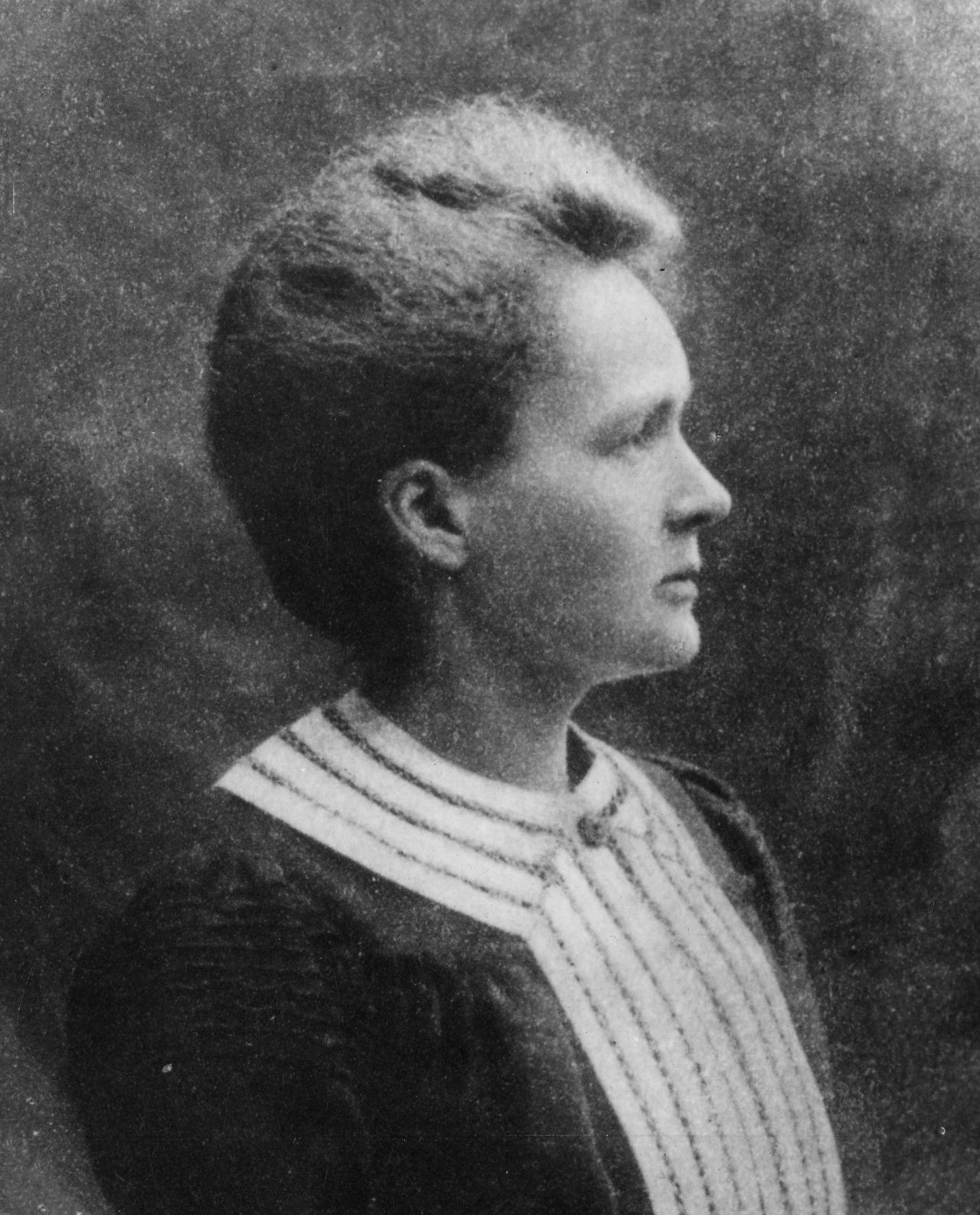
And, of course, Madame Marie Curie. The first woman to win the Nobel Prize, she drew much press, though not at first to her favor. The Athenaeum, after the 1903 prizes were announced, attributed her prize to “M. Curie and his wife, who greatly assisted him,” and only a women’s paper in Boston put her name alone in a headline.
Within the year, Scientific American profiled her as the “charming, young girl” Pierre Curie had met. The science prize had a new, young face, one that drew attention from all corners of the world.

Finally, the continuation of nomination letters served an enormous purpose. In an effort to identify deserving candidates internationally and democratize the nomination process, the Academy wrote to a few hundred professors every year. Every professor who received one was able to submit nominations that would influence the committee’s final decision, and they also had a personal attachment to what Stockholm decided in December, year after year.
By 1930, the phrase “Nobel Prize” appeared six times as often in books as in 1905.
On May 28, 1908, Nature printed the words Nobel Laureate, capitalized, for the first time.
VIII. Through Wars and Downturns
On the morning of April 9, 1940, German troops crossed into Denmark, and by breakfast they were already in Copenhagen. At Niels Bohr’s Institute for Theoretical Physics, Hungarian chemist George de Hevesy was panicking: nestled in his desk drawer were two gold Nobel medals that, if found, could lead to his imprisonment.
Or worse: execution.
They belonged to Max von Laue and James Franck, German physicists who had sent them to Bohr for safekeeping. When the 1935 Peace Prize was awarded to Carl von Ossietzky, a German journalist who was then in a concentration camp, Hitler had forbidden any German, in any field, to ever accept a Nobel Prize again.
Taking gold out of the Reich had become a crime, and a Nobel medal symbolized something even more dangerous than gold. Each award was engraved with its laureate’s name. If the soldiers found them, they would find proof that two German scientists had smuggled valuables out of Germany and given them to a foreigner in defiance of the Nazi state.
Hevesy dissolved both medals in aqua regia, a mixture of nitric acid and hydrochloric acid. He left the orange liquid in a beaker on top of a laboratory shelf, among hundreds of other bottles, and held his breath as the soldiers who searched the institute walked past it.

In that moment, it was clear the Nobel carried its weight in gold as more than just a prestigious award in science. Governments, especially autocratic ones, do not ban awards that do not matter. The prize had become the one honor in science that no state could control.
Sweden’s neutrality allowed the Nobel institutions to continue operating across political divisions that were breaking other international scientific organizations apart. The International Association of Academies had collapsed, and the new International Research Council, founded by the victors in 1919, barred the Germans outright.
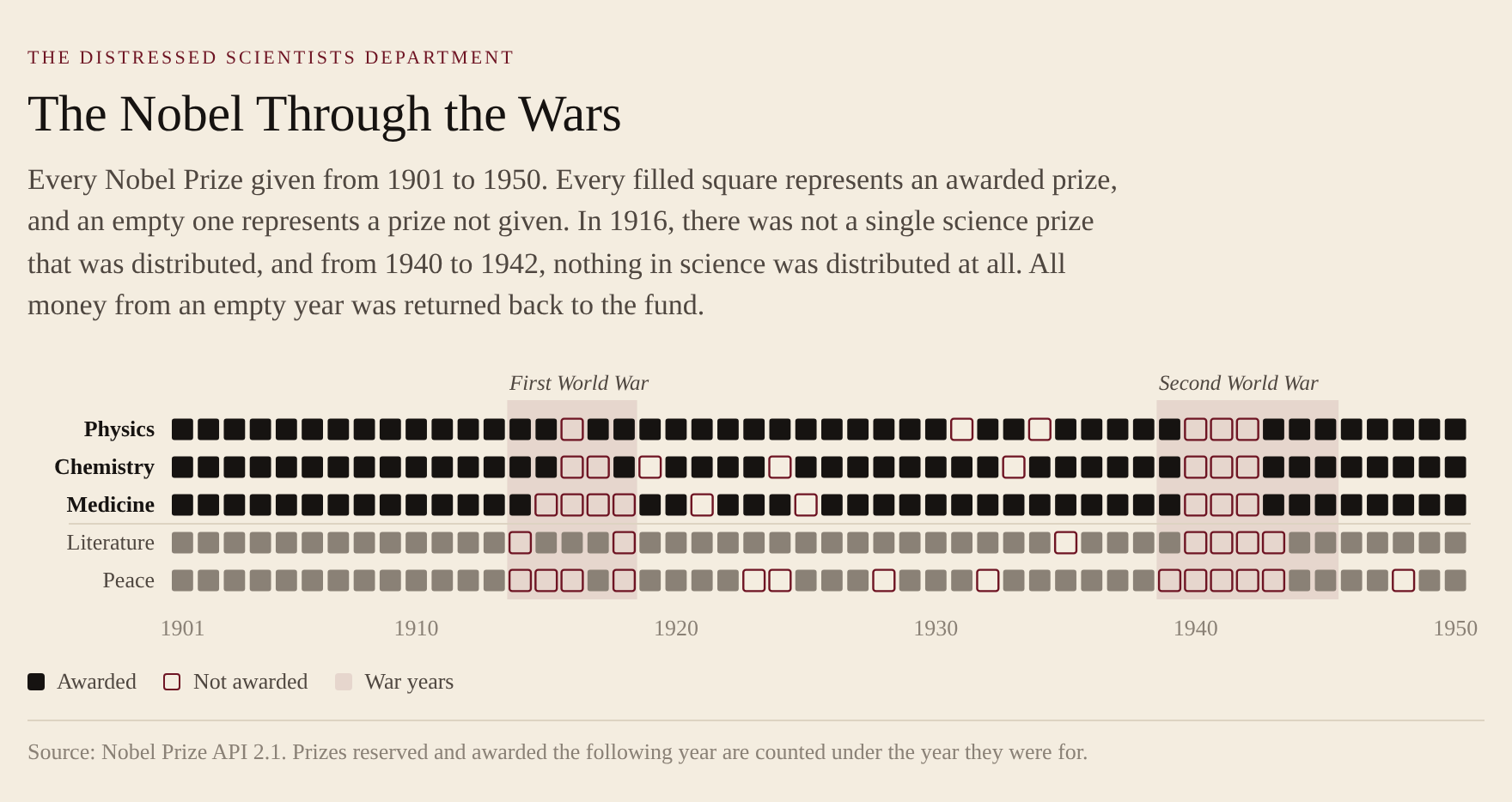
There were, of course, animosities that divided the nominations and nominees. Although the letters to international professors continued, in 1915 and 1916 Germans nominated only Germans. The ceremonies had stopped between 1914 and 1919. In 1916, no science prize was awarded at all.
When the ceremonies resumed in 1920, the king was ill and the chairman of the Foundation, the literary historian Henrik Schück, opened the proceedings, saying, “We had a dream, and we have awoken from it.”
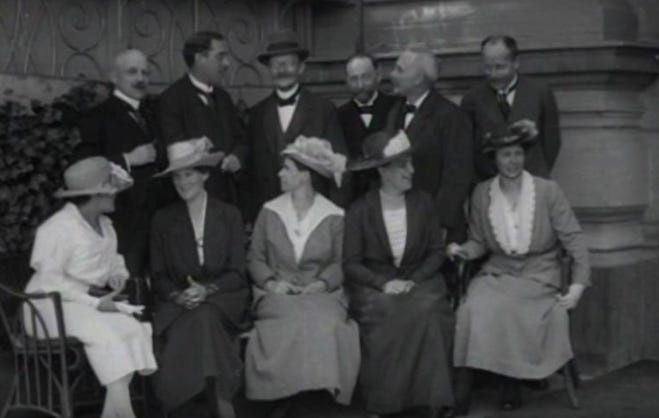
Five Germans had come to collect prizes held over from the war years. Among them were Max Planck and Fritz Haber, whose ammonia synthesis had fed Germany’s armies and whose chlorine had been released over the trenches at Ypres. The five were photographed together outside the Grand Hôtel, of which a German paper wrote “What a German victory!” while a French one called Haber an exterminator. Ernest Rutherford, some years later, refused to shake his hand.
During the Second World War, however, all nominations of German scientists came from outside Germany. Three Germans chosen in 1938 and 1939 were made to turn down their awards. One of them, Gerhard Domagk, who had found the first sulfa drug, was briefly arrested by the Gestapo after sending a letter of thanks for the award.
The prize carried on.
IX. And the Money?
Miraculously, the prize managed to remain solvent through two world wars, a depression, and two inflationary decades, while being primarily invested in bonds. For many years, it struggled enormously, which was devastating for a prize that was revered for the cash and freedom it could afford its laureates.
At the beginning of the First World War, the money collapsed. The will had requested Nobel’s fortune be invested in safe securities, which in 1900 meant bonds. Bonds do not survive a war’s inflation, much less one to the scale of the First World War. By 1919, a full Nobel bought just 28 percent of what it had bought in 1901. During the Second World War, the money had fallen again, to 29 percent of its 1901 value by 1943, and it stayed there until 1946. The capital itself had lost about half its real value by the 1970s.
The Nobel had never promised a fixed sum. The will promised to give away the interest on Alfred Nobel’s fortune, rather than the fortune itself. When income fell, the monetary award of the prize fell with it, and the principal was preserved.
And the rest? It was fought for, tooth and nail, by the Foundation.
The Foundation had no natural gift for markets, but it knew how to select people who treated Nobel’s capital as untouchable and defended its investments for decades.
Ragnar Sohlman, the same twenty-six-year-old who first defended Nobel’s wealth with a single pistol, served as the Foundation’s executive director for seventeen years, through the Great Depression and the Second World War. At 26, he had saved Nobel’s money from the French tax authorities. In his 50s and 60s, he saved it from the Swedish ones.
In 1920, the Nobel Foundation was the largest single taxpayer in Stockholm thanks to the Swedish state, which had been eyeing Alfred Nobel’s massive fortune for years. In 1925, the Nobel Foundation retaliated by refusing to award it. By this point, the prize was consequential enough that the government knew it had to cooperate; so, just two years later, the rate came down from 40% to 3%.
One step at a time, the foundation began to reinterpret what “safe securities” meant. It was allowed to buy property in 1939, later acquiring buildings as a hedge against a Soviet nuclear strike. It won an exemption from American tax on its investments in the United States in 1953 and began, for the first time, to own shares. At least a tenth of each year’s income was added back to the principal capital, and the prize continued to be set as a share of income rather than a fixed sum. The committee decided that if no candidate was worthy enough to hold a prize for that year and if that money was not given, it would go back into the fund.
Over 125 years, the foundation was able to beat every assumption that it would go underwater financially by keeping one rule absolutely: that the principal belonged to Nobel. Everything else could be cut, skipped, renegotiated, or fought for, and the people who ran the foundation spent their careers honoring exactly that principle.
X. Why the Nobel Endured
Perhaps the most obvious reason is that it retains independent scientific authority. Alfred Nobel was dead before the first nomination letter went out. The prizes are chosen by academies, not by a benefactor, and there has never been a living founder in the room whose friends might win the award. The only rival gaining ground at a significant pace is the Abel Prize, which Norway founded in 2002 by replicating the Nobel’s selection criteria exactly. An academy chooses the winner, the king presents, and the ceremony is held in the auditorium where the Peace Prize used to be given. Mathematicians now rank it above the Fields Medal, which is 70 years older.
The foundation has also exercised great restraint to retain its prestige. Every year, at most three names are selected per prize in five fields, announced through one week every year since 1901.
In 1979, a stamp dealer named Jakob von Uexküll offered to sell his stamp collection, which was worth more than $1 million, to fund two new Nobel prizes for the environment and for development. Swiftly, the foundation declined. In 2009, a group of scientists, including E. O. Wilson, asked for new prizes in environment and public health, and the foundation said no to them too. The only addition across the foundation’s 125-year legacy has been the prize in economics, which was endowed by Sweden’s central bank in 1968. The foundation’s own website still says it is “not a Nobel Prize.” Over the years, the Nobel Prize has stayed the exact same size.
It has also produced network effects, accumulating reputation. Since the earliest years, previous laureates have been able to nominate future winners. When the open archive was analyzed as a network, it was noted that a candidate nominated by a past winner in his first year of nominations was roughly 3.5 times as likely to win. In the 1970s, Harriet Zuckerman found that 48 of the 92 laureates whose prizewinning work was done in the United States had trained or worked under eventual laureates. This is why young scientists want a Nobel Prize: because the people who taught them had one, or at least desired one.
It also created a culture of novel scientific ambition. Nobel’s will had emphasized discoveries and inventions that benefited humanity and placed no restrictions on what laureates could do with their winnings. At the first banquet in 1901, Emil von Behring announced that he would place his prize money towards furthering the higher-risk, higher-impact tuberculosis research he had wanted to do. He invited Swedish scientists to visit his laboratory in Marburg to see the work for themselves. His earlier prize had been awarded for diphtheria.
Unlike a conventional research grant, the money arrived without the need for an approved proposal, a predictable set of milestones, or a committee to satisfy. The Nobel was able to reward work already done but could also finance work that nobody yet knew would succeed.
And finally, in the words of Gustav Källstrand, the curator of the Nobel Prize Museum, to say that there are winners implies that there are losers. And, well, people want to be winners.
In 1972, the investor John Templeton founded a prize for progress in religion and set its value deliberately above the Nobel’s. Prince Philip presented it at the Guildhall. For over 50 years, it has offered a prize sum worth more than the Nobel, and yet few outside the field can name a single winner.
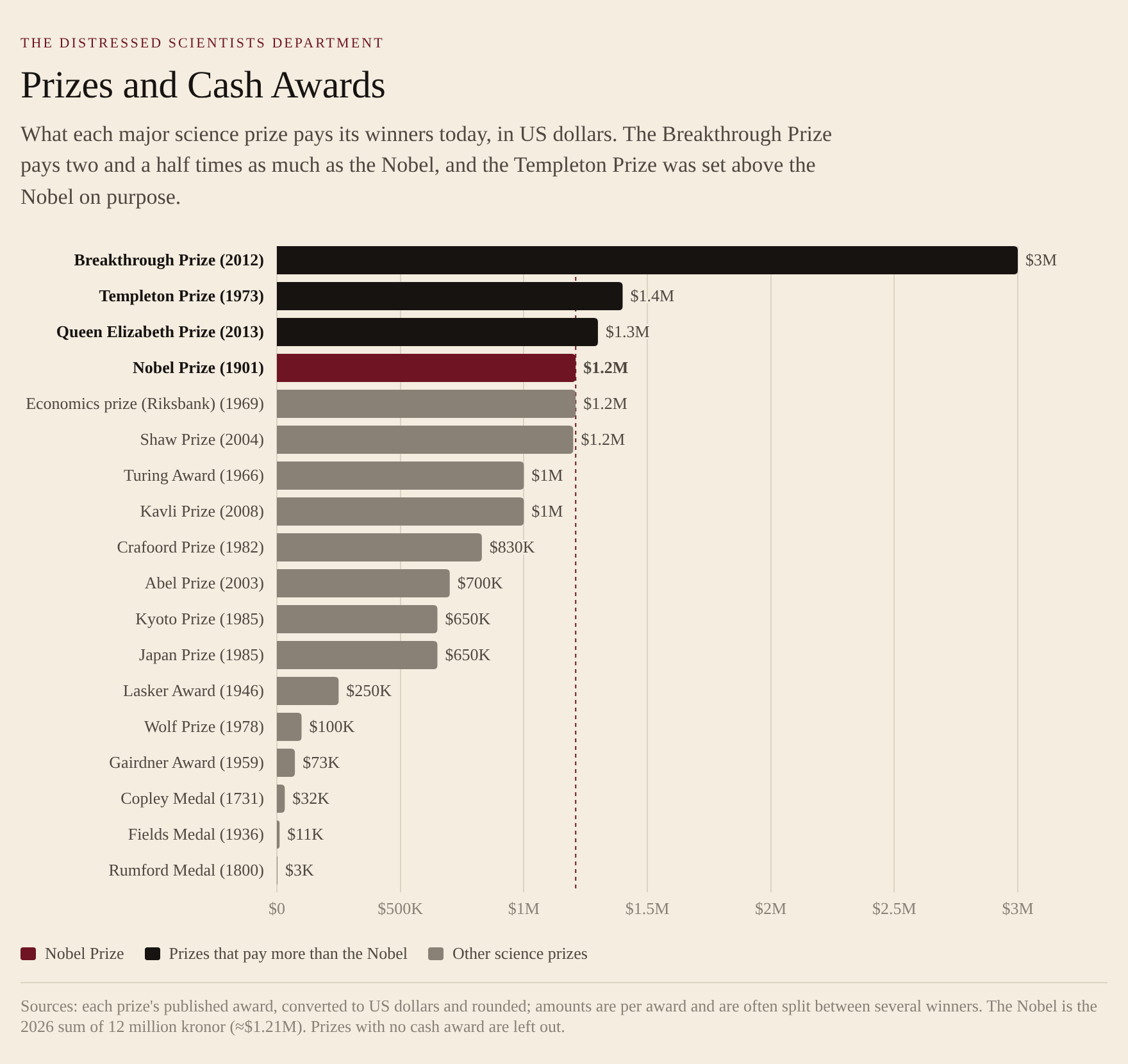
In 2012, Yuri Milner, who had made a fortune investing in Facebook, gave nine theoretical physicists $3 million each, more than double the amount the Nobel offers. Their ceremony moved into a hangar at NASA Ames with a red carpet. Morgan Freeman hosted, Alicia Keys sang, and the trophy was designed by Olafur Eliasson. Four years later, when asked how the prize is doing, Milner said it compared well with other prizes but had a “long way to go” before it caught up with the Super Bowl.
Nearly every prize founded since 1901 has described itself as a Nobel of something: the Nobel of Mathematics, of Computing, of the East, of Engineering. When Google raised the Turing Award prize to $1 million in 2014, the Boston Globe’s headline was that it had lifted the award “into Nobel territory.”
The Nobel’s own announcements have never needed to mention any of them.
Two years after Gosse wrote to the Times, Lord Rayleigh won the Physics Prize, and William Ramsay won the Chemistry Prize.
Really great to read. Just goes to show how much work goes into building sustainable institutions. When it’s done well, people just assume that’s how it’s been so that’s how it should always be. I wonder how a deep dive for other prizes, not in the sciences, like the Oscars, might be.
One thing I wonder about though is whether all the reasons given for the endurance of the Nobel are accurate. Pointing out its reluctance to endow more prizes as a reason could be true, but could the opposite not be true as well? That its enduring despite its limited exposure to different fields? The introduction of the economics prize hasn’t really diminished the status of the Nobel even if it isn’t technically a Nobel. There is of course a limit, (e.g. introduce 150 prizes and that’s probably too much brand dilution) but I don’t know if we can say that choosing to be conservative on this point is such a strong reason for its continued reputation. Many universities have historically been slow to move towards adding new departments, fields, etc. and in those gaps is when we see new institutions become prestigious and rise to the top.
Always great to have you back. Can’t wait to see where you take this and what changes are to come.